A lively week of pottery, work, Porto memories and sociability.
Week commencing Monday, 17 August 2026
Quantified Self
This week: Stand 5/7; Exercise 4/7 and Move 5/7. (66%). Morning walks: 0/3. Office days: 2/5. Total steps: 49,517. 19 hours in meetings.
Life
I have decided I need to be a bit more careful with what I eat, so I am back to weighing and measuring in an attempt to stop putting on weight and hopefully lose a little before my next holiday.
Related, it lasted two days before I broke.
The pottery was collected. We did a video call to reveal the pieces to everybody. They turned out better than expected.
To the office on Wednesday, hello to our new analyst. Nice that she came to the bar for a drink afterwards.
Unrelated, PY was ill, so we didn’t make the Thursday night thank you party.
Hectic week at work; I am rather energised, which seems to have coincided with some others not being.
They came to fix the manhole cover they discovered was broken when plumbers were last here. And found new problems.
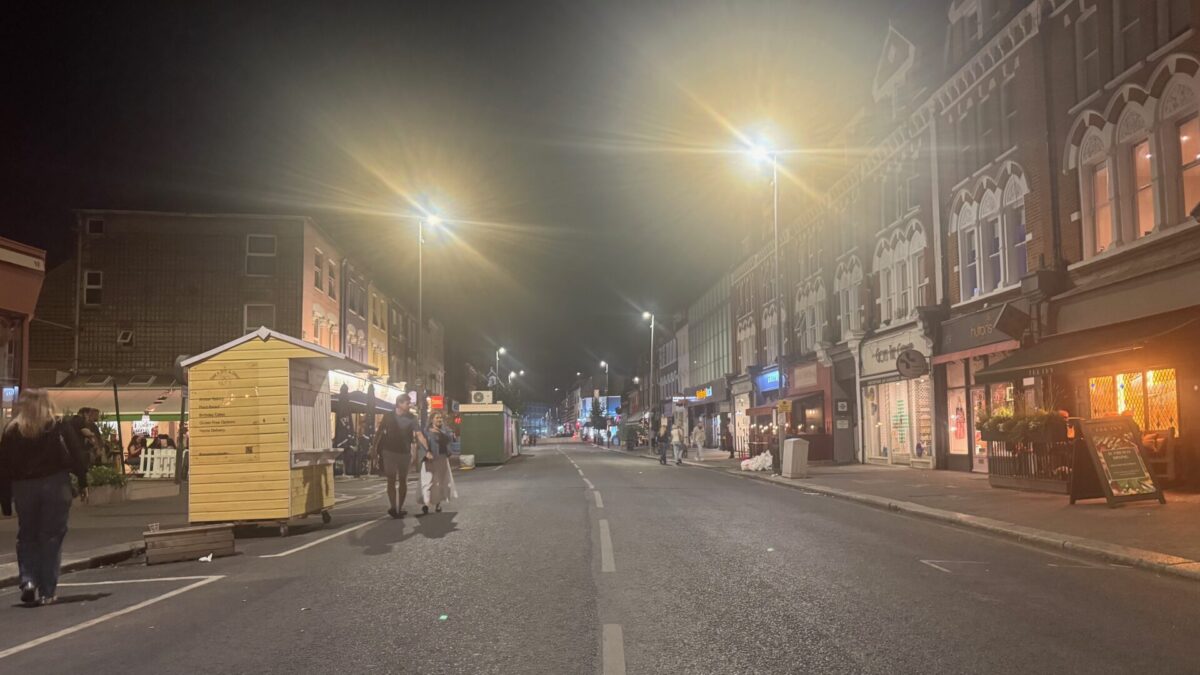
Drinks and dinner at Northcote Road on Saturday. I had no idea that it’s closed to traffic on summer weekends. It was really nice to get around, with lots of people at tables outside pubs and restaurants.
I wrote a thing about our visit to Porto: hills, bridges, rivers, and, of course, port.
Media
I went to the IMAX Wimbledon to see that god-tossed voyage on the biggest canvas cinema allows. I can’t decide about The Odyssey – I coped with the length, liked the cinematography and soundtrack, and am not sure about everything else.
Episode 3 of Downie Live: Bangkok to Bali was another good travel journey. I need to watch the finale. I fancy an international train journey.
Four days in Porto: hills, bridges, port tastings, river cruises, good food and a trip into the Douro Valley.
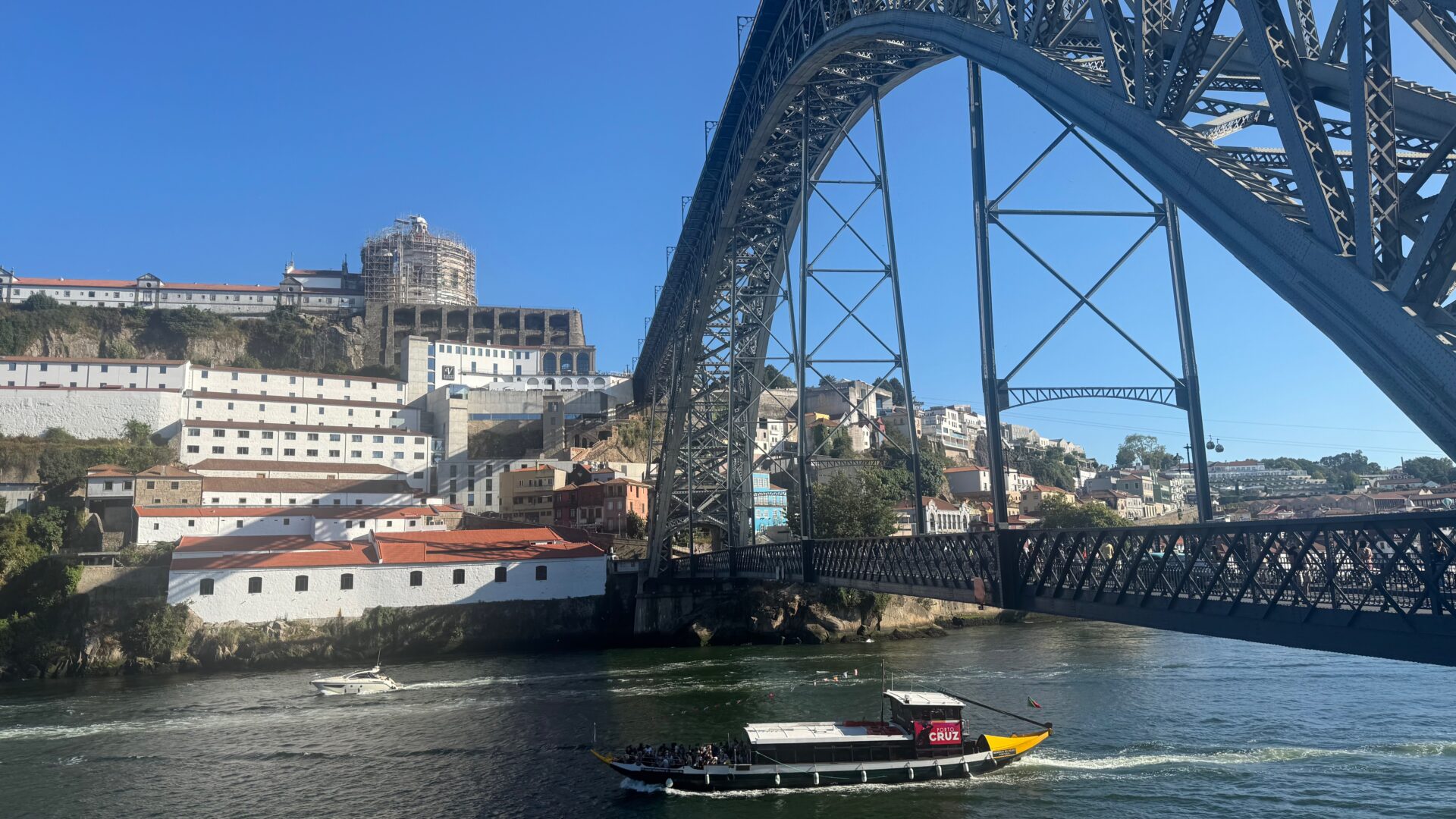
A rabelo boat glides beneath the Dom Luís I Bridge.
We got to Porto with a sightseeing ticket, a last-minute book club, and no clue about how many hills we’d end up walking over the next few days.
In Porto, it felt like everything involved going uphill at some point. Even after a downhill walk, there was always another climb. There were steps, steep streets, and plenty of moments when I had to stop and catch my breath. I wondered if anyone actually lives in the centre and manages all that climbing. Did I mention the hills? At least the good wine and, of course, the port made all the effort worth it.
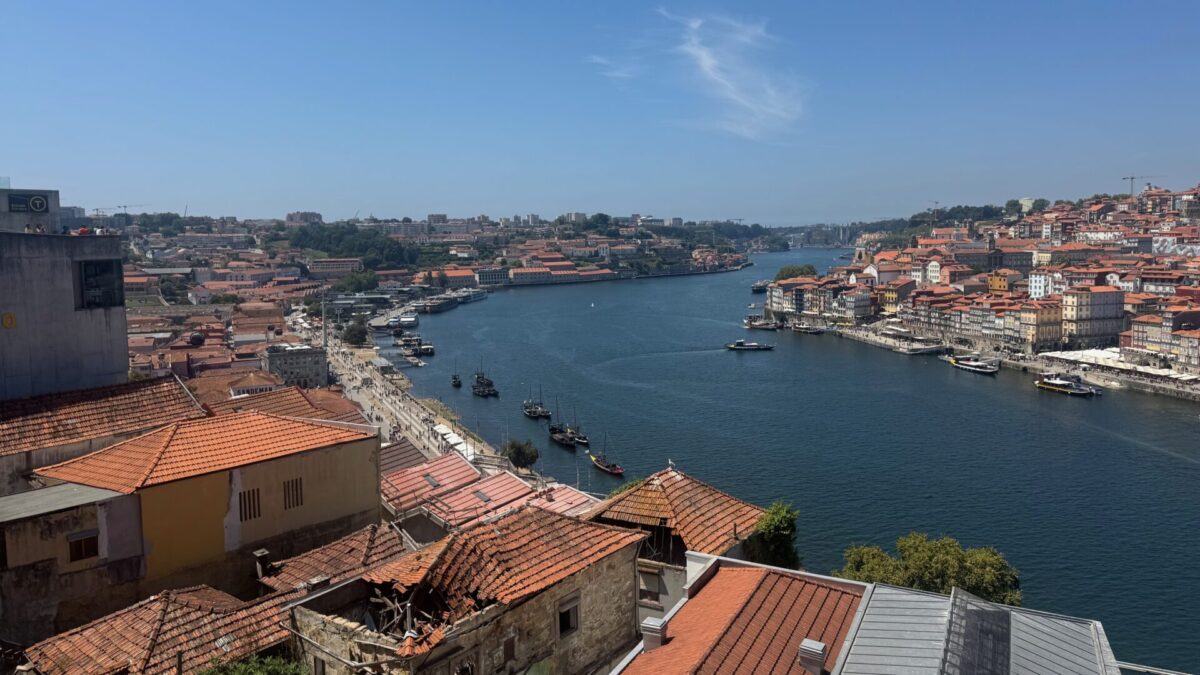
Besides the hills and the port, two other things really stood out: the bridges and the river they cross. The Douro runs through the centre of Porto, separating the city from the area across the river, which is actually Vila Nova de Gaia, though most tourists probably just call it Porto. We crossed the river by bus and on foot, sat by it eating pastel de nata, watched local kids jump in, took a tourist cruise, and eventually followed it all the way into the Douro Valley, though we did that part in a Mercedes minibus.
Our first proper view of the water came by accident. We had pre-bought tickets for the hop-on hop-off buses and, after finally finding the right first stop, promptly forgot to check which route it was running on and got on the wrong one.
The bus crossed the Ponte do Infante Dom Henrique, which gave us our first look at the Dom Luís I Bridge. On one side, colourful buildings and terracotta roofs climbed the hills, while on the other side were the port lodges of Gaia. We drove down roads that seemed too narrow for a double-decker bus, passed the cable car and port houses, and eventually ended up back where we started.
After that, we found the right bus and took the longer route past the Palácio de Cristal before reaching the Atlantic at Castelo do Queijo. Near Matosinhos, the smell of sardines grilling outside the fish restaurants was overwhelming. I wanted to get off and eat, but we didn’t. Still, it made me want to find a place serving fish right away.
The stereotypically touristy sightseeing bus is an excellent introduction to any city, and that was the case here. Thoroughly recommended.
The Dom Luís I Bridge is one of those landmarks you can’t escape. We saw it from many different angles. Opened in 1886 and designed by an engineer who had worked with Gustave Eiffel, also a man no stranger to inescapable city icons, it’s no wonder you think of the Eiffel Tower when you look closely at the ironwork. Whatever way you bump into it, it’s impressive.
One of my favourite views came from an unexpected spot. We had lunch at Ponte de Ferro, on top of the Vincci hotel on the Gaia side. The name should have been a clue, but I didn’t realise where we were eating until we arrived. We sat by a window, right next to the bridge, looking down at boats and jet skis on the river. The restaurant was nearly empty, even though the setting was amazing, and the €25 set lunch was a great deal, even without the view.
We saw the bridge again, this time from the water during the Six Bridges Cruise. The trip lasts about fifty minutes and supposedly goes under six bridges, though I didn’t count to check. Since it’s a popular tourist activity, I assume the number is right; otherwise, people would complain online. Dom Luís I is the most famous, but the newer bridges further along the river also look impressive from the boat.
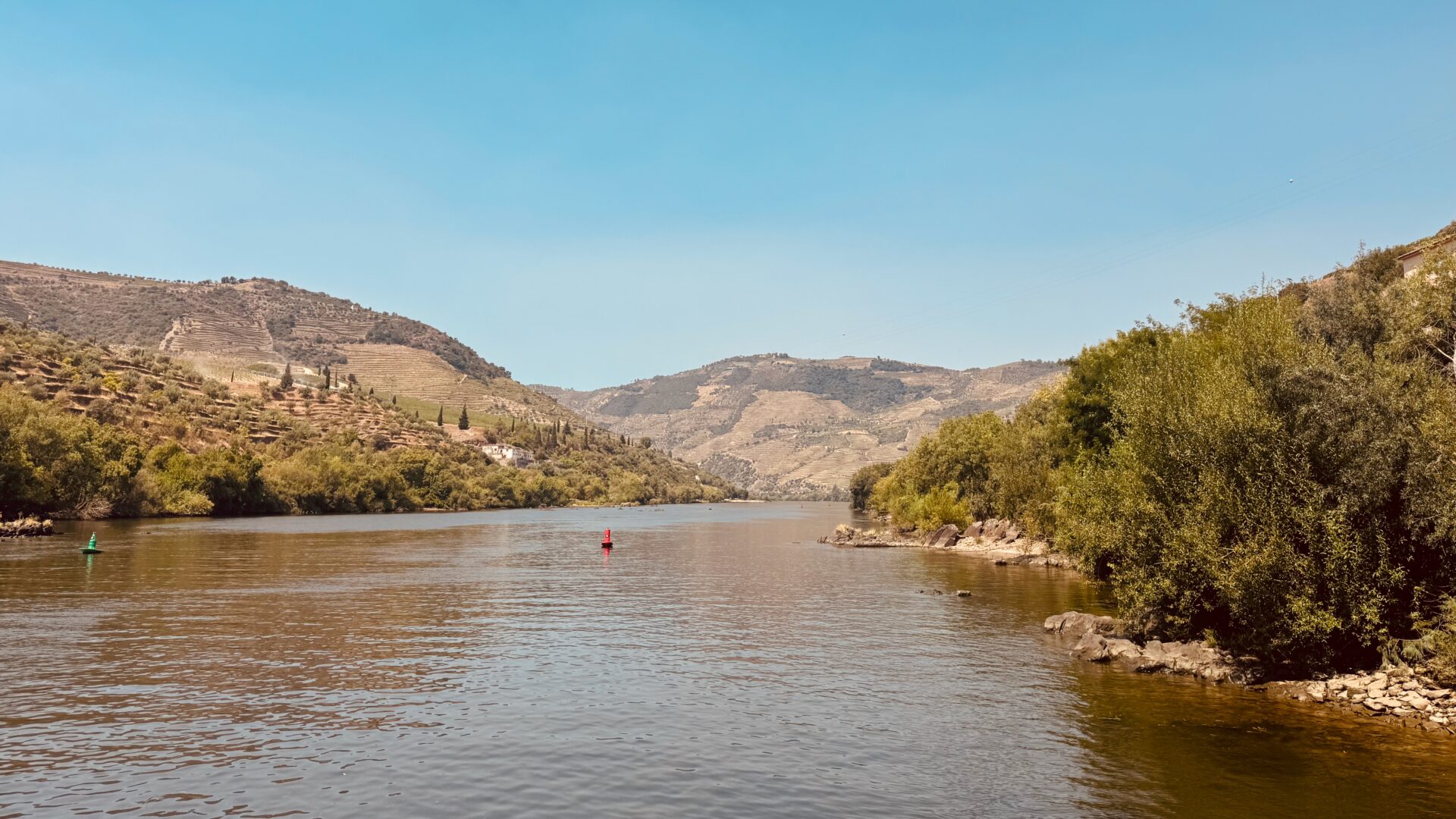
The Douro winds through terraced vineyard hillsides.
On Wednesday, we were back on the Douro, but the scenery was completely different. Locals sometimes call it hell valley because it can reach 50 degrees, but our day trip to Quinta da Roêda wasn’t quite that hot. At the Croft wine estate, rows of vines climb up terraces from the river. Winemaking has shaped the Alto Douro for centuries. UNESCO says wine has been made here for about 2,000 years, and port production has been regulated since 1756. That made me wonder what Croft were doing between 1588, when they started, and when they began in the Douro. All I know is they weren’t making sherry, and they made sure to point out they’re not the same business. Apparently, the port company uses a bigger ‘C’.
After walking through the vineyard and sampling some of its ports, we took a short train journey through the valley and then boarded another boat. This time there were no city buildings or iron bridges. Instead, vineyards climbed up both banks as we travelled along the river for about an hour, being served Prosecco, which in hindsight seemed like a bit of an insult to all those vines that we were looking up at, or were looking down on us, depending on your point of view.
Of course, following the Douro upstream was really just the next step in a journey that started in the dark, sweet-smelling, cool port warehouses. I’m not sure they’d call them that back in Vila Nova de Gaia, or Porto, as most of us say.
Our first tasting was at Burmester, almost underneath the Dom Luís I Bridge. We walked through the cellars, saw the barrels where wine from the aforementioned valley ages and, naturally, finished with a tasting. It was our first proper introduction to port on the trip, and it was all delicious.
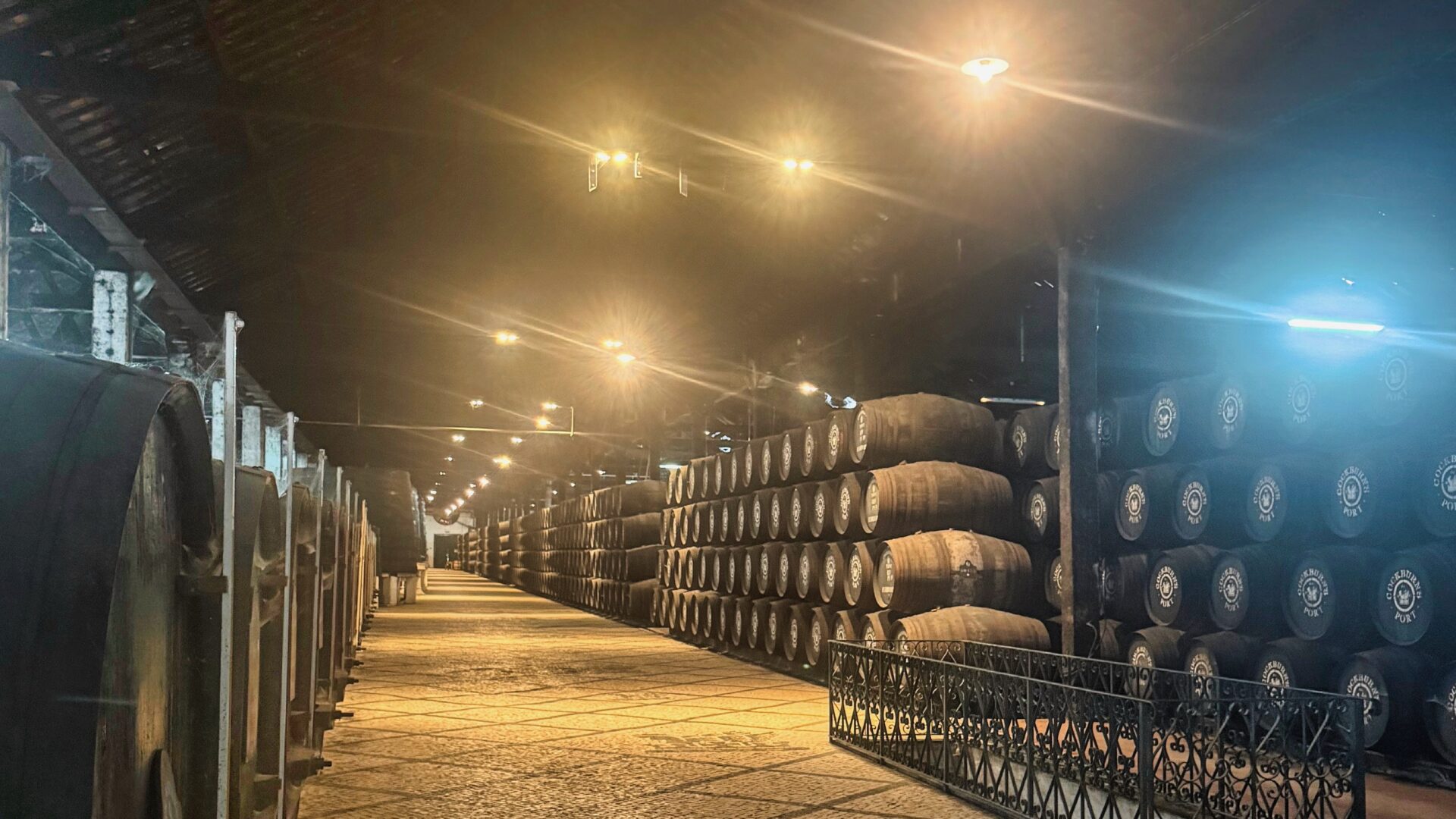
Rows of ageing port barrels fill Cockburn’s cellar.
Cockburn’s was a bigger experience. We walked through more halls filled with oak casks and enormous vats, with the smell of port hanging in the air. There is a working cooperage too, although unfortunately nobody was repairing barrels while we were there. The tasting list I photographed featured a fine white, a 20-year-old Tawny, and Quinta dos Canais Vintage, each paired with a different chocolate. Passion fruit, yuzu and cinnamon, and raspberry made the whole thing feel considerably more sophisticated than simply drinking three glasses of port before lunch.
Quinta da Roêda was our third tasting, and it took us to where the grapes actually grow. The tasting itself was the least impressive of the three, but honestly, by this stage, I’m not sure I could have told the difference between the ports.
That wasn’t our last glass of port, though. On our final afternoon, we sat by a first-floor window near the hotel with another glass, watching tourists walk by below. I have no idea what the port was, but it felt like the perfect way to toast the holiday.
Of course, what’s a holiday without putting on a little weight? Plenty of eating went with all the drinking.
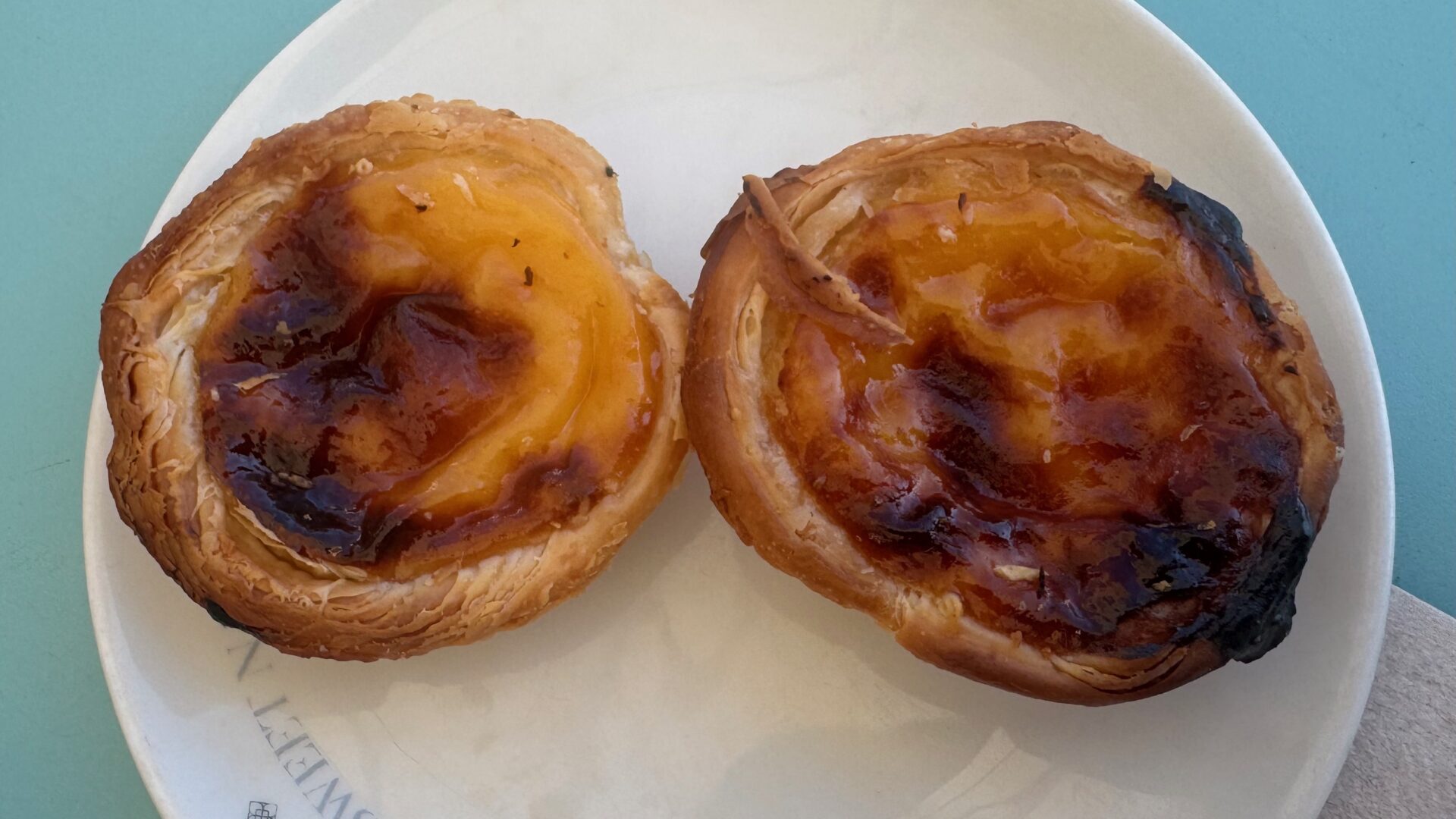
At breakfast on our first morning, I found pastel de nata on the buffet and joked that I could have a custard tart with every meal. I didn’t quite manage that, but I did have another by the river after lunch, and then orange and chocolate versions at a café in Gaia.
Two perfectly caramelised pastéis de nata, straight from Porto.
The biggest hit to my holiday diet was the francesinha at the Time Out Market. Porto’s famous sandwich stretches the meaning of sandwich in a way the Earl may not have intended: bread stacked with meat, ham, sausage, and linguiça, all covered in melted cheese and surrounded by a rich sauce. It reminded me of a lasagne made with bread. It was delicious, but definitely not a light lunch.
On the other hand, Porto also has some surprisingly cosy restaurants. Bartolomeu Bistro & Wine had fewer than thirty seats and served sharing dishes as they were ready. My favourite was the burrata with roasted aubergine, though the cheese and spicy sausage fondue was less subtle and more of a flavour punch.
At Gruta, hidden down an alley, we started with oysters topped with shallot and jalapeño vinaigrette, then moved on to fish. Wild croaker for me and cured codfish for PY. Cod was everywhere, which was something that I hadn’t really thought about before arriving.
In the Douro Valley, the duck-and-rice lunch also came with codfish. I ended up talking for much of the meal stop to a medical artist sitting beside me, who taught student doctors how to draw. At one point she produced a crayon and gave me an impromptu lesson in drawing three-dimensional shapes on the paper tablecloth.
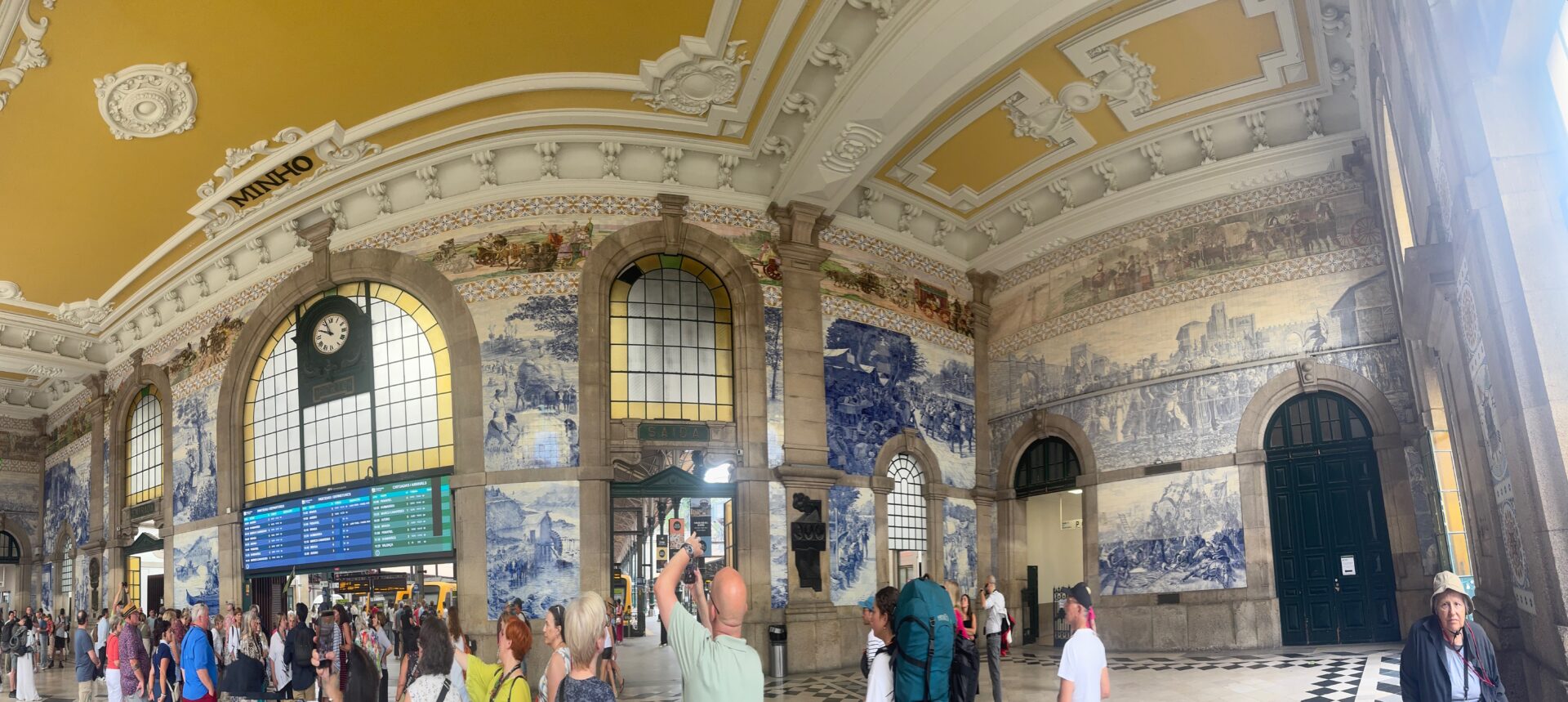
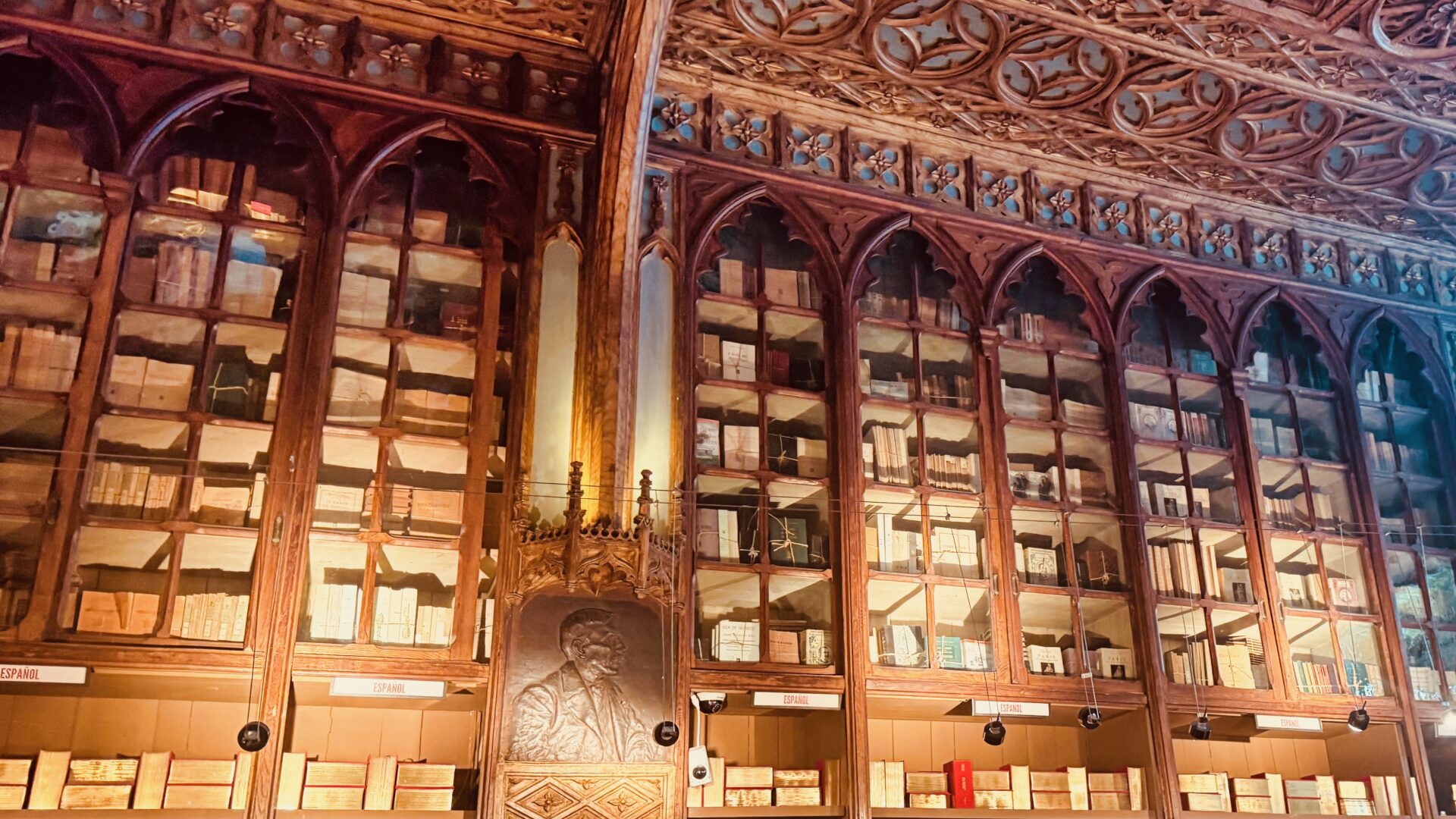
What else did we see? São Bento Railway Station was just a short walk from our hotel, but its tiled interior made it unlike any station I’ve seen at home. You need a timed ticket to get into Livraria Lello, the famous bookshop, which sounds silly until you see the crowds. The current building opened in 1906 and, according to what you can read online, mixes Neo-Gothic architecture with Art Nouveau details. Its stained-glass ceiling and central staircase have made it a big attraction. The entry fee can go toward a book, so at least you can leave as a customer, not just another tourist taking photos of the stairs.
São Bento Station’s azulejo-covered hall in Porto. Livraria Lello’s ornate shelving, Porto’s famous bookshop.
Speaking of books, we started the holiday at Gatwick by deciding to read the same one. PY went to the airport bookshop and picked out Adam Kay’s A Particularly Nasty Case, which gave us something else to talk about between all the sightseeing, eating, and drinking port. I finished it on the flight home. It’s a funny murder-mystery farce I’d recommend if you want something light to read. You don’t have to visit Porto to enjoy it.
Porto turned out to be a great city for a short holiday. Four days were enough to get a feel for the place, but not enough to get used to all those hills.
Fizz, animals, pottery, sunshine, coding and books lead to Porto.
Week commencing Monday, 10 August 2026
Quantified Self
This week: Stand 7/7; Exercise 6/7 and Move 7/7. (95%). Total steps: 76,984. On holiday in Porto.
Life in Portugal
Woke up in a hotel in Portugal on Monday, had pastel de nata for breakfast, and went out in the heat.
It seems everything in Porto is up a hill. In all directions. Always.
Full marks to the tourist information, but I feel that if another customer hadn’t walked in, we might have been chatting there all day.
We did the wrong loop on the hop-on, hop-off tour first. Turned out to be a good decision, although it meant we were by delicious-smelling grilled seafood for the journey by the beach.
I learned Time Out makes more money from the Time Out Market concept than it does from its old listing business. And the one we visited was excellent.
Related, we tried francesinha, considered Porto’s signature sandwich. I thought of it a bit like lasagne, but made with bread. Delicious, very filling, but hardly a sandwich.
All the port traders are old. Monday, Caves Burmester claimed 1750; on Tuesday, Cockburn’s claimed 1815 and Croft, not the sherry, 1588. IMHO, the middle one was best.
There are lots of restaurants which are lovely, but not obvious from the roadside: Bartolomeu Bistro & Wine (try the Japanese-style pancakes); at Botanico and the panoramic restaurant on top of the Vincci hotel, go for the set menu.
The local kids jump off the Dom Luís I bridge, avoiding jet skis and tourist boats. I wonder if it’s really permitted.
The Douro Valley is hot and beautiful. Some of the Brits on the tour with us were loud.
Last week I concluded that I was no artist. At lunch on Wednesday, a medical artist claimed I was wrong and gave me a drawing lesson while we ate.
I paid for a new phone battery to be installed by Apple. I was surprised when it was not fully charged.
Media
I finished the book club book. Adam Kay’s first novel, A Particularly Nasty Case, is a farcical murder mystery, but I keep forgetting about the farce and thinking it’s ridiculous in places, which it was. And quite funny. A great holiday read.
Fizz, animals, pottery, sunshine, coding and books lead to Porto.
Week commencing Monday, 3 August 2026
Quantified Self
This week: Stand 3/7; Exercise 4/7 and Move 5/7. (57%). Morning walks: 0/3. Office days: 1/3. Total steps: 50,835. 14.3 hours in meetings.
Life
Good news from PY’s job had us drinking fizz on Monday night and eating weekend leftovers.
By the end of the week, I’d built an iPhone app for my own use. I discovered that, for an app to work properly, I need to pay for an Apple Developer account, even if it’s just for me. I haven’t done that yet.
Related, in reality OpenAI Codex built it for me. I can see why some people think this is the future.
Tuesday, A’s 10th birthday was celebrated with a trip to Mudchute Farm and Park. Lots of lovely animals to look at, and it’s (mainly) free.
Related, there is an entrance across the ASDA car park. Walk towards the hand car wash.
Following that, we did pottery painting. I slightly regret choosing something with curves because the place provided stencils, which would have been much better on a flatter surface. I did conclude that I was no artist.
Saturday, a walk to M&S and Merton Abbey Mills in the sunshine. Lovely.
Sunday, at the airport, we talked about a previous holiday where we had a book club, reading the same book to compare notes. PY went to a shop, and we now have Adam Kay’s first novel, A Particularly Nasty Case, for the Porto book club.
At the end of Sunday, we were in a hotel in the heart of Porto, and I’d read a decent chunk of the book.
Errata
Last week, I wrote that The Newsreader had the perfect two-series story arc and had ended where it was supposed to. Oops, the only thing that had ended was Netflix UK’s willingness to show me any more of it. There is a third series. I had mistaken “all the episodes available to me” for “all the episodes that exist”, an easy trap to fall into when a streaming service hasn’t coughed up all the money. So, my grand theory about its elegant conclusion now joins the long list of opinions confidently formed from bad information. Think of me as your badly trained AI.
Media
BBC Two quiz night is always fun. We remembered it this week.
State of the Screens: Podcasts Became TV. Ad Budgets Didn’t Notice — Americans spent 40 billion hours with podcasts in 2025. That equals Netflix’s entire 2024 TV viewing. But podcast ads brought in just $3 billion, about 1% of internet ad spending.
New buddy series: Octavia Spencer and Hannah Waddingham in Ride or Die, on Prime.
A productive, cultured week of family, music, reading and creativity.
Week commencing Monday, 27 July 2026
Quantified Self
This week: Stand 5/7; Exercise 2/7 and Move 5/7. (57%). Morning walks: 0/4. Office days: 1/5. Total steps: 42,230. 15.5 hours in meetings.
Life
I had a co-working partner for the first two days of the week. While I did my day job, ChatGPT quietly got on with enhancing my blog review tool and created a WordPress plugin for me. Part of the result was this page featuring a series of posts about London.
The nurse didn’t like the fact that I tried to move the seat when I sat down to have my blood test. I wonder if that’s why it hurt more than usual?
Heard for the first time this week: Sam Fender and Olivia Dean’s Rein Me In has now spent 18 weeks at No. 1, equalling the all-time UK record set by Frankie Laine’s I Believe in 1953. As James Masterton points out in his Chart Watch commentary, it has taken 73 years for anything to match it. One more week and the record finally falls – all the more remarkable for a song that took eight months to reach No. 1 in the first place.
Related, on repeat for me this week: Little Miss Twain, by Shania Twain. It’s an older Shania looking back at growing up in Ontario, her mother’s ambitions for her, poverty and her route into music. A really good album.
Sunday brought a lovely afternoon with family. The dishes I served – turkey burgers and slow-cooked pulled pork – worked very well and had largely been cooked in advance, so there was no stress.
Jeremy King, on dining alone: “The problem is that you think that the restaurant is looking at you with pity, whereas in truth it is with admiration. It is so elegant and confident to eat alone, and they envy you?” – Without Reservation, highly recommended.
Related, by Sunday, 2026 was 58.63% complete, and finishing that book took me to 67% of the year’s reading challenge. It’s not often that I am ahead.
Media
Linear TV won on Tuesday night when, after we’d seen the end of The Great British Sewing Bee, the following programme about a murder in Shrewsbury piqued our interest and we stuck with it.
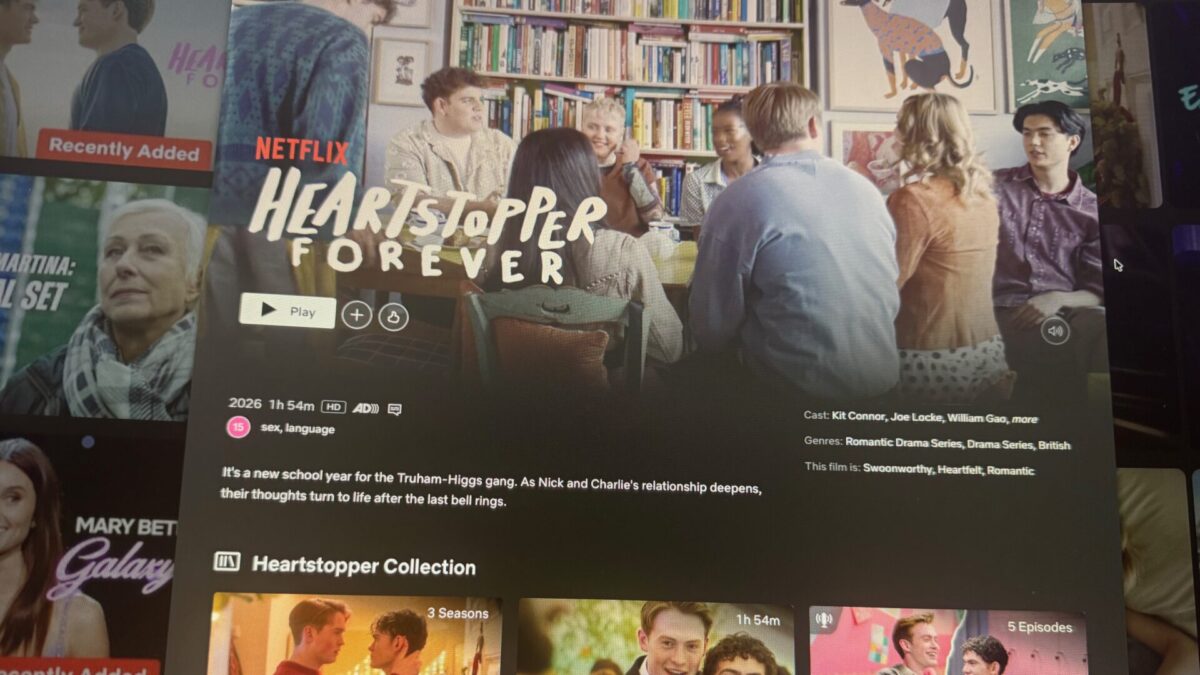
But streaming won my Friday night. I watched Heartstopper Forever, the final film in the Heartstopper story. I liked it, but I did think there wasn’t as much original content as in the earlier instalments, although it is always very nice when a story reaches a conclusion that everybody can buy into.
Then I thought I had an hour, so I would watch the first episode of the second series of the Australian drama The Newsreader. Having seen the first, I was intrigued to see where it would go. I ended up watching all six episodes into the early hours, the last couple from bed. I really enjoyed it, and I can see why the programme ended after two series, because its beautiful story arc comes to a close in the final episode.
Six months spent reviewing decades of blog posts revealed changing writing habits, recurring subjects, forgotten opinions and the value and limits of preserving my personal history online.
In February, I described a small project I developed with AI assistance. My aim was to build a tool that would find the things I had previously written online and published on that day, check the spelling and links in those entries, and produce a list of items needing correction. Running it every day has meant that I have been going through a large number of my own writing in small amounts. It has also given me a tiny nostalgic hit every morning.
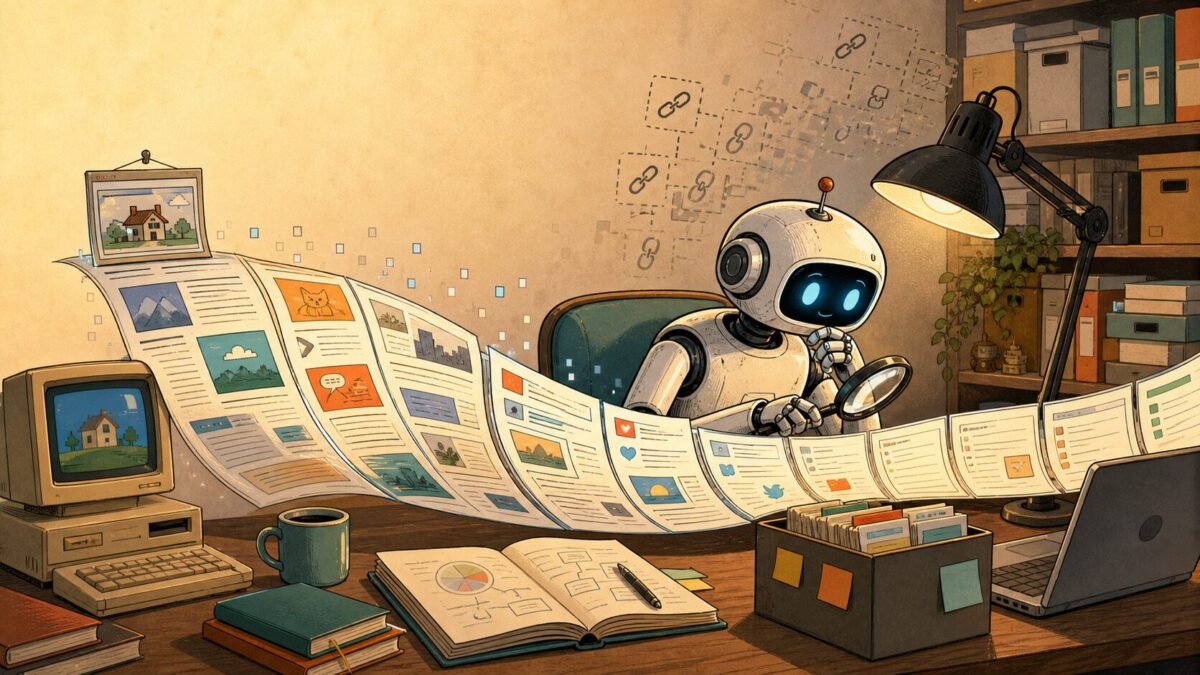
What started as a simple bit of software now counts words, identifies topics and builds indexes, thanks to an AI coding agent. I could have tried to do all this myself, but it’s unorganised, spread across multiple URLs, and seems like more effort than it’s worth. This method does not feel irksome, and I get presented with a list of broken links, missing images, and spelling errors. I don’t really like that last bit. Pre-2000 me could have done with a spellcheck. Remember kids, some of us had it hard back in the days of dial-up!
Six months on, going through my writing has become the most interesting part of this exercise. I don’t know which part of me wanted to make a working archive; after all, the Internet wouldn’t have minded if I had simply deleted everything, but I do plan to carry out the full twelve-month cycle.
The entries include posts from February through July for all the years in the archive: 648 separate posts and just over 190,665 words. A number of the posts can be found on both my previous blog domain, musak.org, and curnow.org; I have counted the writings only once rather than praising myself twice. Fortunately, the small program checks both versions, so it has had to process more words than my brain has.
Before the blog
Early personal websites were static; my own was mostly a biography together with a list of favourite sites. At that time, such sites told us very little about the person who had created them, but they did give a little insight into the lives of people all over the world. When blogging came about, we suddenly felt that we knew the person on the other side of the Blogger page.
The oldest material that I have from this six-month period dates back to 1999. Very little from that time or earlier is included in the figures since so much of it did not survive the redesigns, the move to new hosts, and new jobs. This shows that an archive can seem authoritative and final even when it is incomplete, though you only come to that conclusion because I am telling you.
Between 2002 and 2006, there are 459 posts: just over 70% of everything checked so far is from that timeframe. Together they contain about 91,000 words, but the average is only 199 words. This was blogging at its most bloggy (my current spell-checker is not flagging that word): links, quick observations, reactions to news, short reviews and things that would probably become social media posts now.
Blogging was quick and, at times, crude; I published to keep pace with the day and did not always wait until I had built up an argument, which is why there are spelling errors. That spontaneity gives the archive a sense of place and time, even if it hasn’t been thoroughly polished.
One of the biggest surprises was a series of tiny posts about London’s bid to host the 2012 Olympics. On 6 July 2005, I posted as the vote unfolded: the preliminary result, the tension and then the celebration. They are possibly the most blog-like posts in the archive. Reading them now, you can see why Twitter won.
I had forgotten that I blogged through that day. I had also forgotten the abrupt change the following morning, when the mood of London changed. The key point is that this little sequence of entries captures excitement followed by shock without the benefit of hindsight. A later summary could not recreate that; I’ve found little bits of my archive are like this.
The subjects remain
I asked myself whether there are any trends in this first section of what I might grandiosely term “my archive”. If we examine the (rather) imperfect labels that I used for the posts at the time, London occurs 39 times, technology 35 times, travel 33 times, music 28 times, and the web and reviews 26 times each. Entertainment appears 23 times, radio 21 times, gay life 20 times, and Formula One and film 19 times each.
That paints a reasonable summary of me: technology, London, radio, music, film, television and travel. The better posts usually use those subjects as a way into something personal.
The archive also preserves opinions I no longer remember holding. I mentioned my uncertainty about the congestion charge in My digital history. I also discovered that I did not particularly like The Producers when I first saw it. I fell in love with a recent production and would never have remembered my original disappointment without the blog. There are business trips I can only remember because I posted; at the time, one office looked very much like another to me, even if the people spoke a different language. I really wish I had written more about those trips.
I am not going to rewrite my previous posts to make them match my current views, since their worth lies in showing what I thought back then, even if some of those thoughts were inconvenient or a bit embarrassing now.
The blog gap year(s)
After 2006, the number of entries drops sharply; between 2007 and 2015, there were only 28 posts, even though the average length increased to about 540 words. Quick links and minor observations were moved elsewhere, and the posts on the site became longer.
For a great many bloggers, ‘elsewhere’ meant Twitter, since it was perfect for posting a link, making a brief comment or having a quick exchange. The blogs had tried to set up conversations – trackbacks, anyone? – but there had been no true equivalent of a conversational thread.
Back in the day, Twitter was a more pleasant environment than it is now, and met that desire for conversation. In reality, most social media platforms were. We had not, at that time, realised how toxic the new medium could become. A number of ex-bloggers continued to stick with short-form publishing, and I do have a Twitter archive somewhere, but I moved back towards long form.
A quiet blog year may not have been a quiet year online; it is simply the part I still own that looks less chatty. At one point, my site archived all my social media posts, but it got messy, so I ditched it. Now that data is locked in with the mega-corps. I wish it were easier to combine it all. I had a small writing revival between 2016 and 2021, when 35 posts emerged during this sample period, but writing had become something I didn’t do – at least not where I had the most control – and I now think that’s a shame.
Weeknotes and the current phase
Starting in 2022, the pattern changes once more. There are 121 posts, amounting to almost 65,000 words. Eighty-eight of them are weeknotes, averaging about 446 words, while the remaining 33 posts average roughly 767 words.
I had already come across weeknotes online, but it was Giles Turnbull’s The Agile Comms Handbookthat encouraged me to start. Weeknotes were generally associated with ‘working in the open’. In my first version, I included a section on work, even though that part was not made public. I decided to get rid of it since I didn’t think it was necessary, even though I did use the format at work for a brief time.
What appealed to me was the growing archive of weekly summaries that I would amass. At first, I thought weeknotes would be what I wrote. Instead, the habit encouraged me to start typing whenever I wanted to record something else.
Weeknotes reveal my habits and life patterns: chronology is easy to document; explaining why something mattered or how it felt takes more work. I have written about that problem before. A public archive can record a life without always revealing the person living it; I am trying to do better at that.
Readable
A good deal of my earlier writing is still easy to understand and, in a surprising number of cases, remains relevant to me. Certain entries deal with technologies that at the time appeared new, while others are simple records of a particular phase in my life—such as a trip, a place of work, an argument about politics, or my view of London before some change took place.
A post may continue to exist even though the web surrounding it disappears. A linked site may close down, change its address, or take down the page that prompted my reply. In some cases the Internet Archive still has a copy; in other cases there is only my part of the conversation. I have already explained the mechanics in Cool URLs, so I shall not go over them again. The key point is that it is possible to preserve my words, but not all of their context.
Not all old posts are valuable; some were intended to be thrown away when first written and have not got better with time. Yet a brief piece of text can still put me in a certain place and bring back a thought I had forgotten.
Choosing the best
The most recent section of the project uses AI-assisted analysis to go through the archive by subject and select the best writing. It is not always true that the years in which the greatest amount of writing was produced are also the ones that contain what I consider good writing, and recent efforts are not always more interesting than an uneven early entry that includes one interesting observation.
I had forgotten some pieces now appearing in those lists. Moscow: War & Advertising in a Week brought back memories of flying into Russia while my parents were leaving Georgia ahead of the advancing Russian army. It is not just a record of the trip; it recovers the memories and feelings from that time. The people in Russia were very concerned about my Mum and Dad. They didn’t want the advancing army either. That post reminded me that people are more similar than they are different.
The shortlist that I have so far – what I refer to as my best bits – has several instances where a subject develops into a personal narrative. I’ve included some of these on my homepage. People will always have their own idea of what is best, but following six months of correcting and organising the archive, the project has taken on a completely new purpose. I am genuinely looking forward to finding out what the next six months of my archive have to tell me.
Tower traditions, island reassurance, gripping books and cheerful journeys delighted.
Week commencing Monday, 20 July 2026
Quantified Self
This week: Stand 6/7; Exercise 6/7 and Move 7/7. (90%). Morning walks: 0/4. Office days: 1/5. Total steps: 55,645. 20.4 hours in meetings.
Life
The Ceremony of the Keys at the Tower of London is a wonderful tradition, and I am glad I got to see it this week.
News of another leak in Ryde midweek turned into a nice couple of days on the Isle of Wight, and no real damage was detected.
I took the advice of the bookseller in Waterstones on Thursday and bought Alice Feeney’s My Husband’s Wife. I’d finished it by Saturday. Maybe I should ask for advice more often.
In the food court that I went to after buying the book, I became transfixed by a man who sat in one of the bar-like spaces, working on a laptop with an attached second screen as though it were his daily place of work. How the entire place wasn’t reading his work is beyond me.
On Friday evening, I used the seasonal bar at the FastCat terminal to buy wine for the train. The front carriage was air-conditioned and almost empty.
Related, the man across the aisle from me on the train, all tight vest and hair gel, suddenly blurted out the theme from The Archers. It made me smile; his look was not what I expected from an Archers fan.
Sunday, an air-conditioned, quiet, central London pub made for a nice afternoon catch-up with friends.
Another New PM
We started the week with a new PM. Andy Burnham took over from Sir Keir Starmer at Downing Street after being confirmed as Labour leader last week. The former mayor of Greater Manchester becomes the 59th person to hold the office.
Relatedly, three hours after he stepped into No. 10, I was listening to a podcast questioning his legitimacy to be in charge. It’s so depressing: journalists creating a low-level narrative just hours in.
Relatedly related, on Tuesday, John Healey was named Chancellor, becoming Burnham’s first Cabinet appointment. Ed Miliband moved from energy to become Foreign Secretary, Wes Streeting — Burnham’s leadership rival before he ruled himself out — was made Defence Secretary, and Angela Rayner returned to government as Housing Secretary after her earlier resignation over her housing-related tax affairs. The ins and the outs are fascinating, but do they change anything?
Burnham framed his premiership as a “circuit breaker” for Britain, bringing forward “the biggest changes in the last 40 years”. I guess every PM needs a narrative now, and it better work on TikTok.
Media
Maria McErlane on the ’90s, talking about the Loaded magazine staff: “I was always slightly afraid of your mob. And, you know, I’m sure our paths crossed in some of the sort of ’90s bars and clubs. I’m sure, and I remember people saying, ‘Oh, there’s James Brown over there with his cronies.’ And I remember feeling frightened because I didn’t feel that you were very nice to women.”
Post-World Cup, why are people discussing commentators’ lip mics? Here’s a history.
Finished the current series of the new Bergerac. It was a bit of a step up from the first season, with a decent mystery — a groom killed at a Jersey wedding — but possibly a bit padded in some of the middle episodes.
And then another remake was suggested to us. This one is much more absurd: Magnum P.I.. Both versions share the sunny Hawaiian setting and the core premise of a private investigator living on Robin Masters’ estate; the 1980s original and the modern reboot feel different. No thick moustache, and a bit more action, but the reboot remains as pleasingly, comfortably ridiculous as the original.
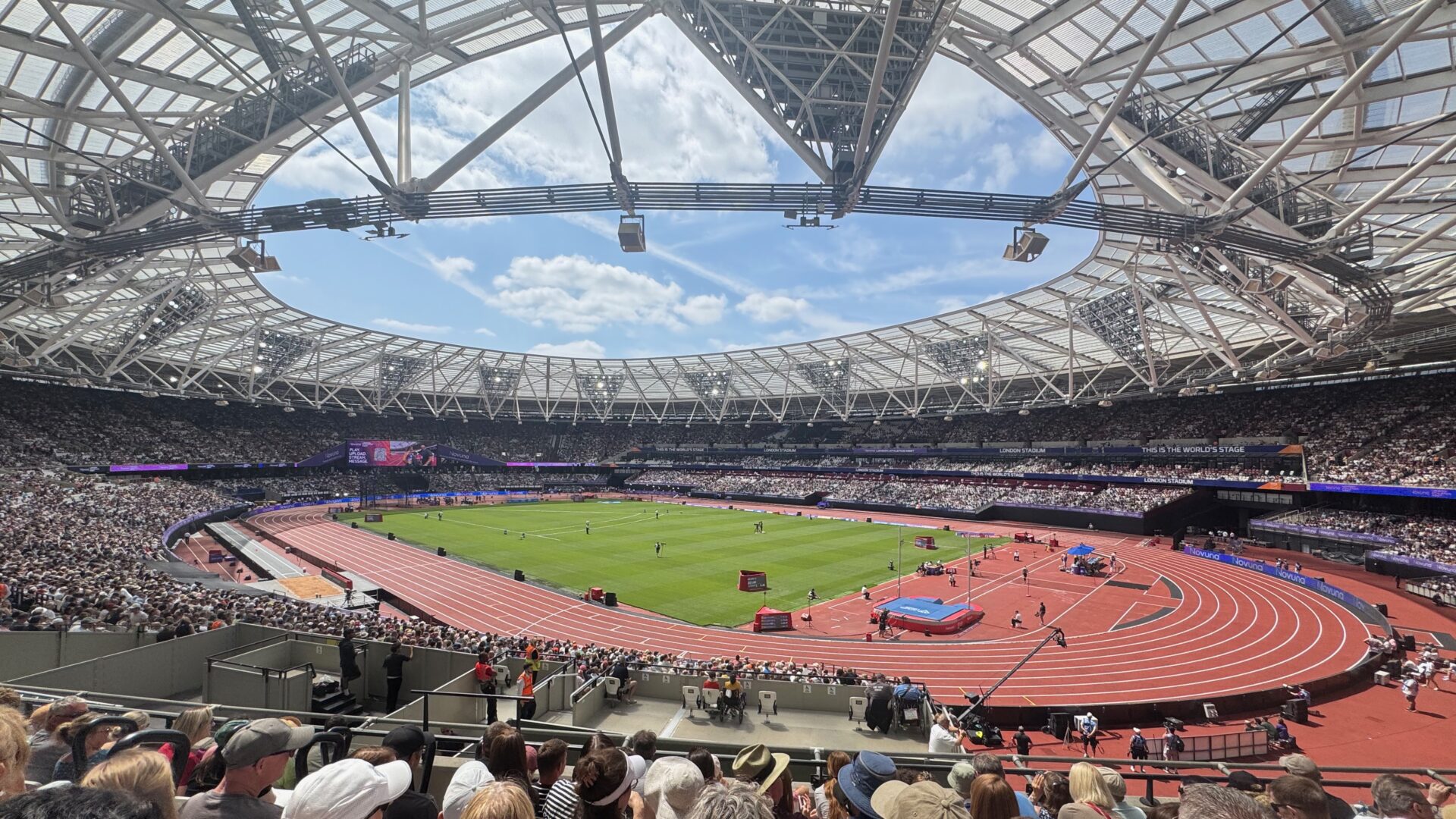
Packed stands greet athletes at London Stadium’s summer meet.
Quantified Self
This week: Stand 5/7; Exercise 5/7 and Move 6/7. (76%). Morning walks: 0/4. Office days: 1/5. Total steps: 53,796; 22.9 hours in meetings.
Life
Monday, a drink and a bite to eat at The Leather Bottle, which I was delighted to do given I’d not left the house all day. PY had some good news, so we had another glass.
Proud godparents on Tuesday, as K graduated from Cardiff with an amazing degree. Seems like I know some smart people.
My pension adviser reckons I might live to 83. Now we’re trying to figure out when the money might run out. So, still working.
Drinks on Wednesday were meant to try and avoid the World Cup. We failed and got quite into it.
Lovely work social on Thursday. I may have gatecrashed the social committee’s post-event drinks, mainly because I didn’t clock that they were doing it.
Relatedly, I paid for an Uber that I didn’t take. It took so long to turn up that I hopped in a taxi. I don’t have the energy to argue with them about it.
Cabaret in the Crypt – The Best of West End Musicals, in St Martin-in-the-Fields’ Crypt café. Great performances, but the backing track made it feel less real.
World Cup Matches
Remember, I said this last time about the AI commentator.
Wednesday, COMMENTATOR: It was a game of two halves — a cagey, scrappy first period in Atlanta where neither side truly convinced, before Gordon’s thumping 55th-minute finish, set up by Rogers, had England dreaming of a first World Cup final in 60 years, only for Argentina to do what Argentina always seem to do — summon Messi from somewhere deep, watch Fernandez curl in a brilliant long-range effort on 85 minutes, and then, in the cruellest of all stoppage-time twists, see Lautaro Martinez nod home another Messi assist to shatter English hearts once more and send the defending champions through to face Spain in the final.
Saturday, COMMENTATOR: It was a game of two halves — extraordinary, barely believable halves at that — as a second-string England side, Kane and Bellingham both left on the bench, tore France to shreds in Miami with Rice scoring inside three minutes, Konsa heading in a second, and Saka running riot to make it 4-0 by the break, before France emerged for the second half a completely different proposition, Mbappé bagging a brace to become the all-time leading World Cup scorer and Barcola and Dembélé adding two more to have England clinging on desperately, until substitute Bellingham settled nerves with a composed finish in stoppage time to seal a quite remarkable 6-4 victory and give England third place — their best World Cup finish since 1966.
Media
I am three episodes in. He hasn’t solved the crime yet, but he will.
In the evening, there were ten surprisingly filling courses inspired by dishes from around the world as part of Six by Nico’s Street Food tasting menu. Lovely.
London has spent the week behaving as though it has been moved several hundred miles south without anybody bothering to tell us. The temperature reached around 30°C, the capital was still under an amber heat-health alert, and this is apparently already the third heatwave of the year.
A visit from the police on Tuesday was to the wrong address, but it was still a bit alarming. Although there was nothing to worry about in reality, it’s disconcerting to look at a Metropolitan Police ID badge and wonder whether it’s real. Maybe I should have gone to the office three days this week instead of two.
Lovely dinner in Woking on Thursday to celebrate C’s birthday. It was all very nice, but the restaurant was quiet and lacked atmosphere. The staff were trying to stay busy, but I think there are only so many times the bottles behind the bar can be washed.
Saturday, to The Producers at the Garrick. Seeing the same production of a show seven or eight months after the first time is interesting. How much do I remember? Was this bit in the version I saw previously, or have they tweaked and changed it? The songs are very well known, but was there always a giant sausage on a fork in one scene?
Related, Alex Lodge, playing Leo Bloom, was fantastic, and I hope I am not just saying that because he’s one of the Crazy Coqs regular performers. He had all the right comic timing, and given that we’ve seen him before and know he doesn’t normally speak like that, the wonder of acting astounded me.
COMMENTATOR: It was a game of two halves — and then some extra time for good measure — as England were rocked by Schjelderup’s 36th-minute opener in Miami, hauled level in the dying seconds of the first half by Bellingham, then spent a tense and nervy second period unable to find the winner before the Real Madrid man pounced on a Nyland fumble in the 93rd minute to send Tuchel’s side into the World Cup semi-finals for the first time since 2018 — a place in the last four secured against a Norway side that lit up this tournament and can hold their heads high. (h/t: Claude.ai)
Remember, I said this last time about the AI commentator.
On departing London Euston aboard a Glasgow-bound train — albeit one from which I would alight well before Glasgow — I heard that the onboard shop had no hot drinks. Scotland would be a fair way for me to go without tea or coffee.
Some of the reviews for the “Sam-Ryder-looks-like-him” version of Jesus Christ Superstar seem to think it was better than I did, while others were more middling. I still recommend something else.
Media
It’s been too hot to sit in and watch TV. Really, go outside.
Theatre, Pride, music and memories made an eventful, uplifting week.
Week commencing Monday, 29 June 2026
London erupts in colour for Pride 2026 celebrations
Quantified Self
This week: Stand 6/7; Exercise 5/7 and Move 4/7. (71%). Morning walks: 0/4. Office days: 1/5. Total steps: 55,794. 20.5 hours in meetings.
Life
For the avoidance of doubt, the World Cup banter bits are entirely written by Claude AI. I thought it would be amusing to get it to start match summaries with the cliché ‘it was a game of two halves’. The remainder of these weeknotes remains hand-carved, using a chisel and some stone.
With that in mind, here’s this week’s World Cup instalment: COMMENTATOR: It was a game of two halves — England were rocked by a DR Congo side who took the lead inside seven minutes and looked for long stretches as though they might pull off the upset of the tournament, before Kane, who else, dragged Tuchel’s men back level in the 75th minute and then rifled home the winner four minutes from time — both goals assisted by Gordon — to seal a 2–1 victory and a date with Mexico at the Azteca in the last 16. (ht: claude.ai)
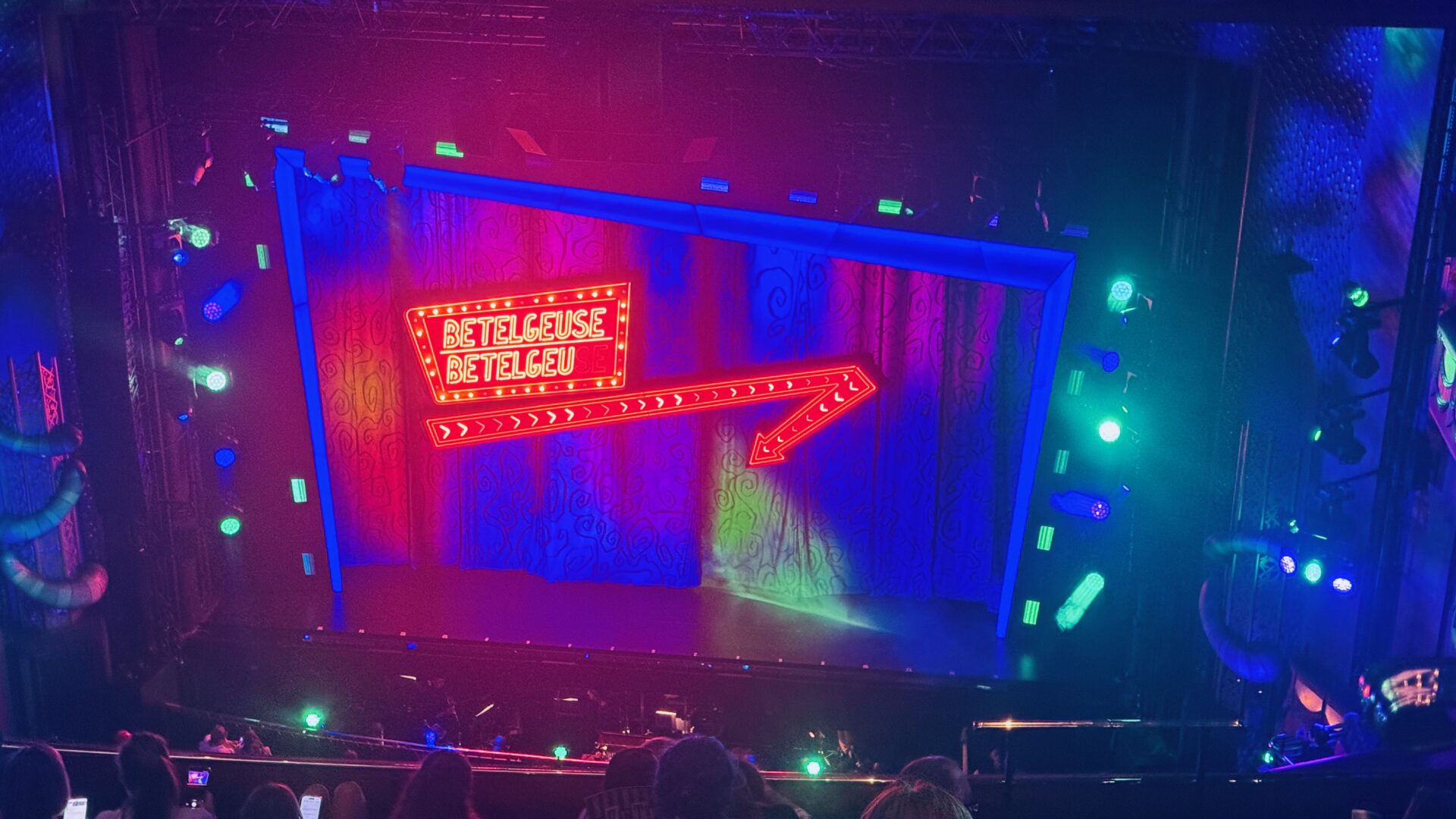
Monday night theatre: Beetlejuice The Musical. It’s a funny show that breaks the fourth wall and talks to the audience, with plenty of contemporary references and a Radio 2 tote bag. Having a demon offer the tote bag as a symbol of the underworld to middle-class theatregoers is a fun poke at the stalls; it stands out as both ridiculous and charming, much like the whole show.
I’m not sure how we ended up seeing so much theatre recently, but tonight we went to see the West End transfer of Beetlejuice The Musical.
Based on the film but not the same, the musical makes Beetlejuice the main onstage character, and Lydia (played by Hannah Nordberg) has a more developed story arc, mourning her dead mother, than happens in the film.
Mainly, it’s a funny show that breaks the fourth wall and talks to the audience, with plenty of contemporary references and a Radio 2 tote bag. This may seem odd, and I had to look it up. In London, this is used in place of the NPR equivalent in US productions. Having a demon offer the tote bag as a symbol of the underworld to middle-class theatregoers is a bit of fun poked at the stalls; it stands out as both ridiculous and charming. Very much like the whole production.
David Fynn (who we last saw in School of Rock) was excellent as Beetlejuice. He has a real stage-filling presence and has a much bigger role than the character does in the film, holding the whole plot together and breaking the fourth wall to talk to the audience. The staging changes frequently, perhaps too frequently, but is quite impressive. The music, however, is a little less memorable. Predictably, the easily remembered songs are those used in the film, originally by Harry Belafonte: Day-O (The Banana Boat Song) and Jump in the Line, which are what stick with you.
I thought Creepy Old Guy in Act Two was clever as it pokes fun at the source film’s plot device of having a centuries-old demon trying to marry a teenager. Dead Mom is delivered by some great vocals, and should be the emotional heart of the show, but writing this now, I only remember the song with the memory of the performance. Maybe I need to hear it again.
Don’t let that put you off. This is a self-referential, self-aware musical with comic bits and songs, meant to be enjoyed in the moment.
World Cup Banter: Tuesday night, it was a game of two halves, though if we’re honest, neither of them was much to write home about, as England stumbled to a goalless draw against a resolute Ghana side that left Boston with a thoroughly deserved point. (ht: claude.ai)
Related, Saturday’s World Cup Banter: It was a game of two halves — a frustrating first period in New Jersey where England huffed and puffed against a stubborn Panama side without breaking them down, before Bellingham swept home from a Saka corner on 62 minutes and Kane nodded in five minutes later to seal a 2–0 win, claim top spot in Group L, and set up a round-of-32 meeting with Senegal — with Kane’s header the icing on the cake, making him England’s record goalscorer at World Cups, surpassing Gary Lineker. (ht: claude.ai)
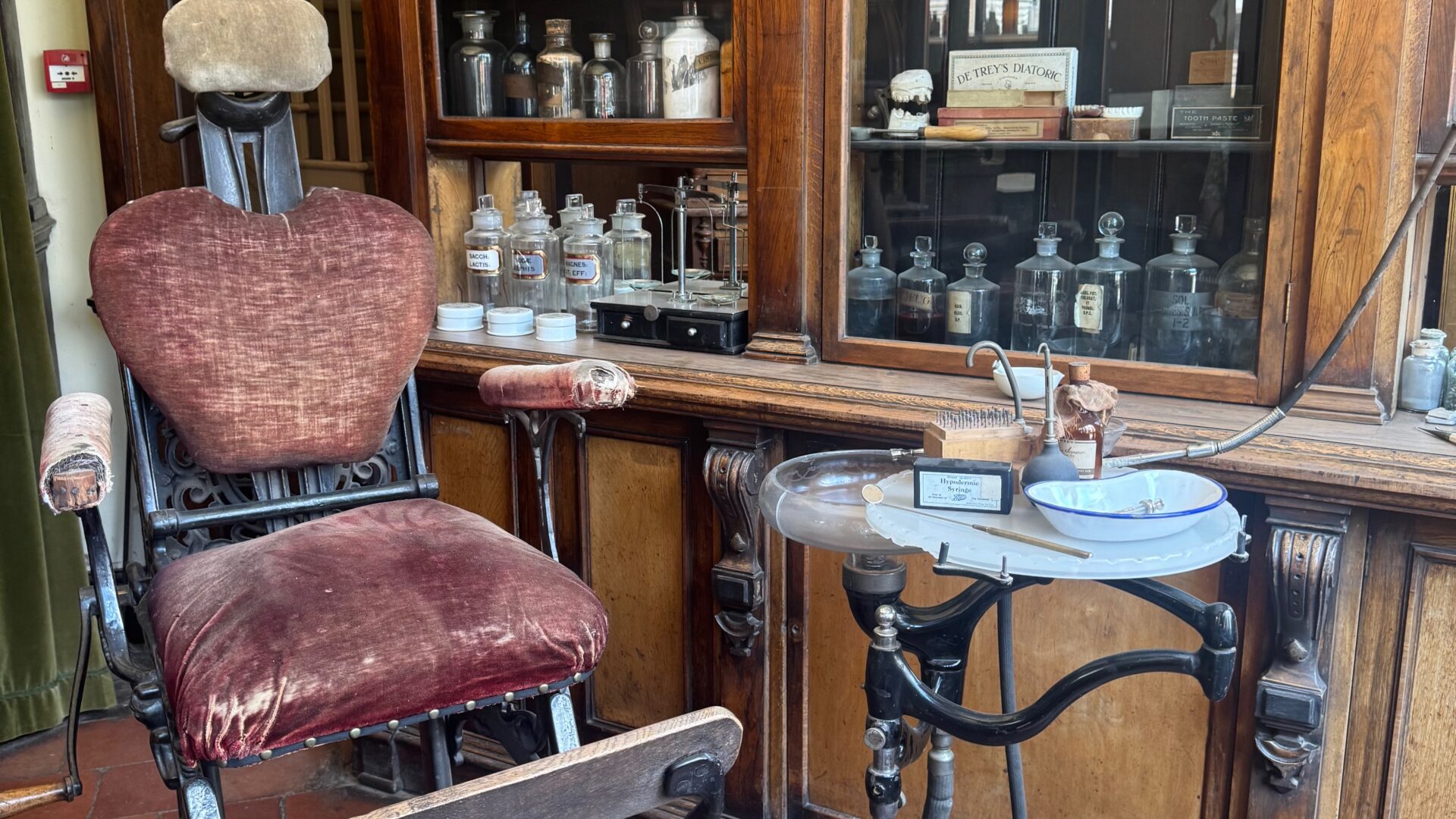
Victorian dentistry on display — mercifully, appointments are no longer available.
After breakfast, we got in the car and drove to Blists Hill Victorian Town, which was a step back in time in more ways than one. Many years ago, when we first moved to Shropshire, the Ironbridge Gorge Museums were regularly on the list of places we would take visitors who came to see us in our new home. I am not sure if any of those visits were quite as sweltering as the sun we had today. We spent a great deal of our day pacing ourselves, darting from one pocket of shade to the next just to keep cool beneath the blazing sun. Did the sun bake down on the Victorians like this?
The sweltering weather made us look at the heavy machinery in a whole new light. After looking into the bank, without converting anything to old money, fascinated by the capabilities of the antique cash register in the grocery shop, and thanking whoever that we didn’t have to endure Victorian dentistry, we stopped by the impressive Mine Winding Engine, but the massive mechanism was completely quiet. The demonstrators explained that it actually hasn’t worked for a few years now, though the team remains hopeful that they will be able to return it to full, steam-powered working order one day. Looking at the iron framing in the heat and the boiler room next door, I couldn’t help but think the staff were secretly relieved it wasn’t running today; stoking a furnace in this weather would have been absolutely punishing, although it was suggested there wasn’t really that much steam in the winding room itself. Such an important job the machine operator would have had that he would have been locked in during his shift, to stop distractions.
Amidst the shade-seeking, we also got a look at the town’s new era following the recent National Trust takeover. It was fascinating to read about how the independent Ironbridge Gorge Museum Trust recently handed the reins over to secure the site’s future. According to reports from Museums + Heritage Advisor, the transition was backed by a £9 million government grant to offset rising post-pandemic financial pressures. It feels like a monumental shift for British heritage, and being able to scan in with a National Trust membership certainly made the entry seamless, and so perhaps we’ll be back to the other museums in the group when they reopen under NT stewardship.
At the candle shop, not as pleasantly fragrant as a modern one would be, nor as terrible smelling as this would have been in its day, we watched the fascinating process of hand-dipping two-wick candles. Learning how those double wicks were engineered to survive damp, draughty mine shafts and prevent the tallow from drowning out the flame was brilliant. Who knew you could wave a candle in a draught and it would stay alight?
We didn’t get to do the whole site; it was too warm, and there was too much walking. But NT membership allows us to come back. We ended our day sitting in the shade in the café, with lunch, an ice cream, and tea.
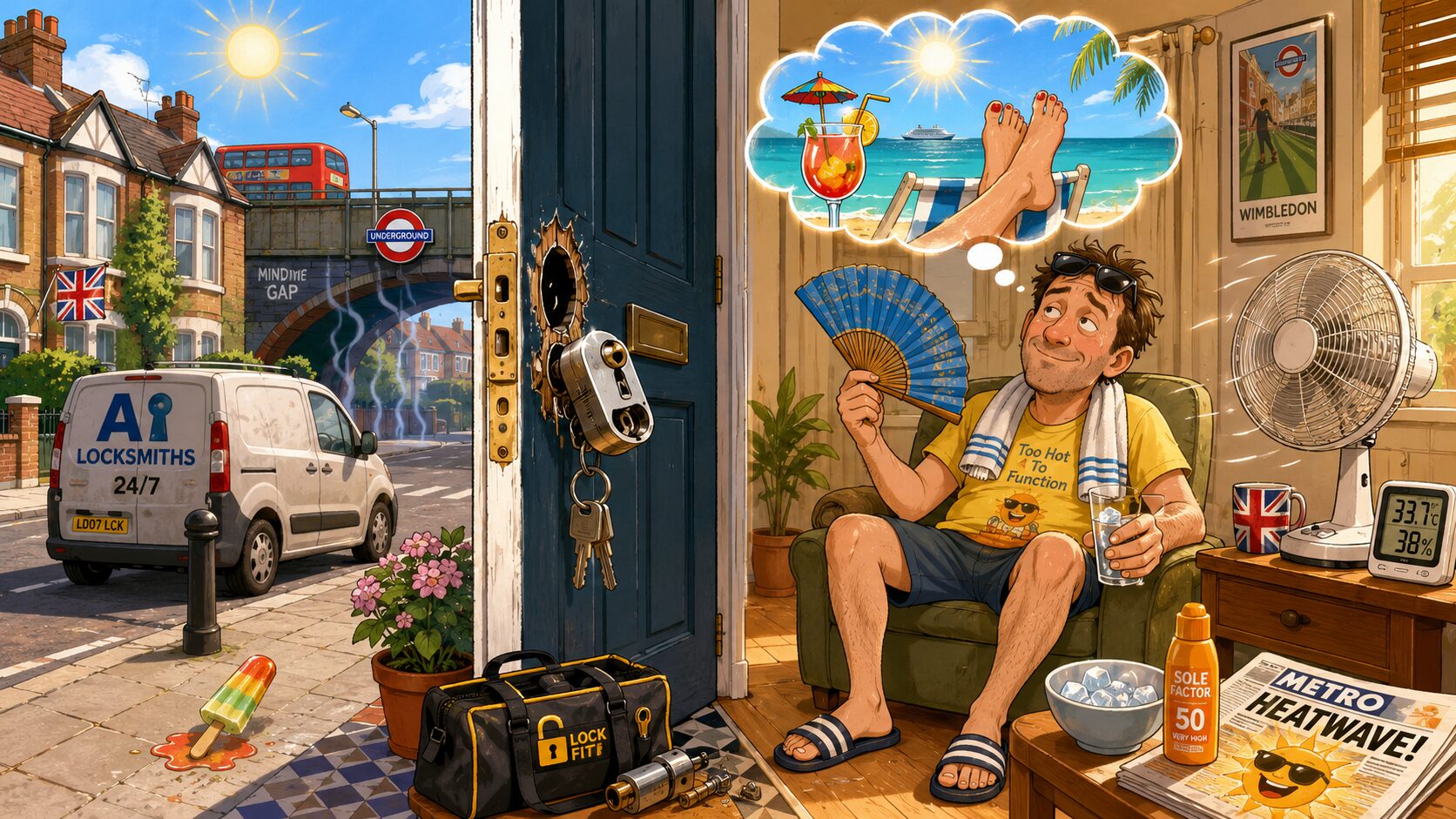
Locked in, sweating, and dreaming of anywhere but here, obviously and AI-generated image.
If you were to believe the “news” media, then you’d be cooler sipping cocktails under a parasol, dipping your toes in the sun’s molten lava, or whatever the sun is made of, rather than staying in suburban London.
Yesterday, I was laughing about some version of this with colleagues, opining reassuringly, to myself, maybe not them, that of course I’m brave enough to get up before the sun is blazing and take the two air-conditioned trains to a place near my office. From there, I can skip most of the outdoors by walking through the shopping centre, where the lack of natural light means it could be any time between January and the end of days; you can only know for sure by observing what people are actually wearing and checking for seasonal decorations. And then, of course, I can spend my day in an 80% empty office that’s 100% chilly, since the temperature will not have been set correctly.
And yet, here I am, in a 32°C room with a mildly cooling fan, and I am quite happy about it.
Last night, returning from the theatre, we had a bit of difficulty getting the keys in the lock, and this morning, as I was thinking about leaving for the office, I tried my key in the lock, and it was going nowhere.
I decided to stay home and call the insurance company again. I was informed that my last call-out to fix the lock was just over 30 days ago, but I was basically trapped in the house because I couldn’t lock up. A locksmith was dispatched.
The initial diagnosis involved a can of WD-40 and a bit of what might, professionally, be called wiggling. But the cylinder remained a bit stiff, and eventually a new lock and keys were retrieved from the van and installed. Twenty minutes, five new keys, and I was once again free to come and go as I needed.
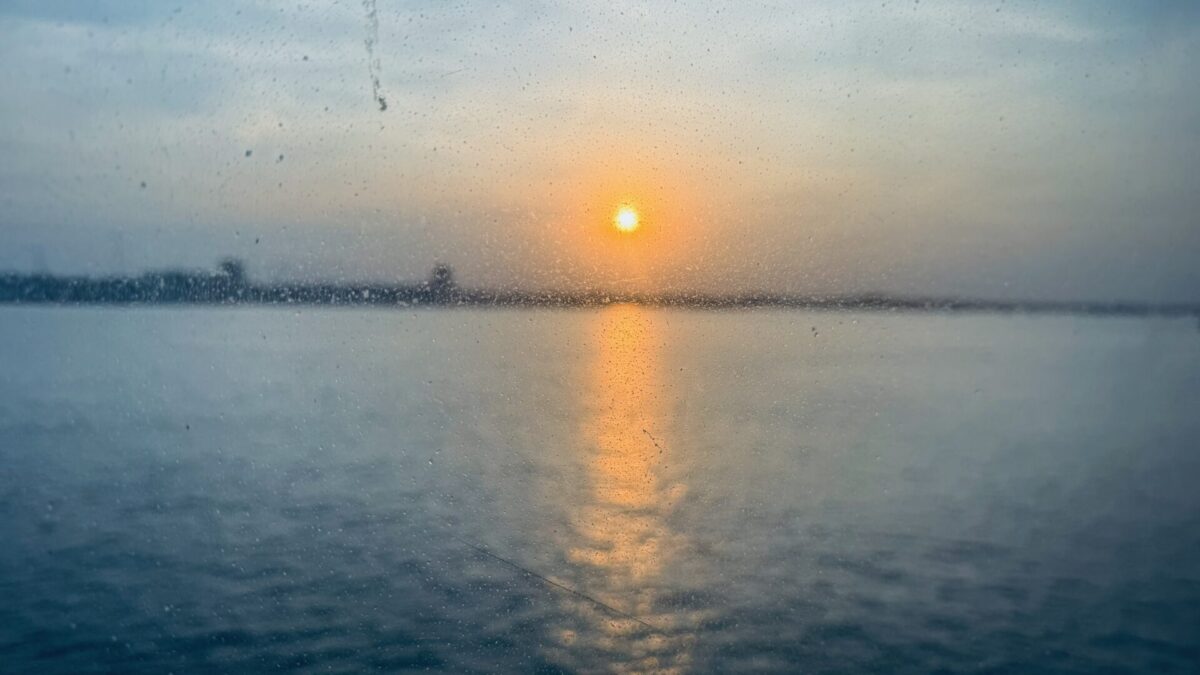
So, in the evening, while PY was at a work summer party, I walked out into the balmy evening heat, locked the door, noticed the sun beneath the bridge at Raynes Park station, bought some pasta and re-entered my own house without issue.
No issues with the locks, but when the pasta was cooked, I reached for a little drizzle of olive oil and instead grabbed a nearby, part-drunk bottle of red wine and started pouring it onto my dinner. I managed to drain it, but it wasn’t quite the same.
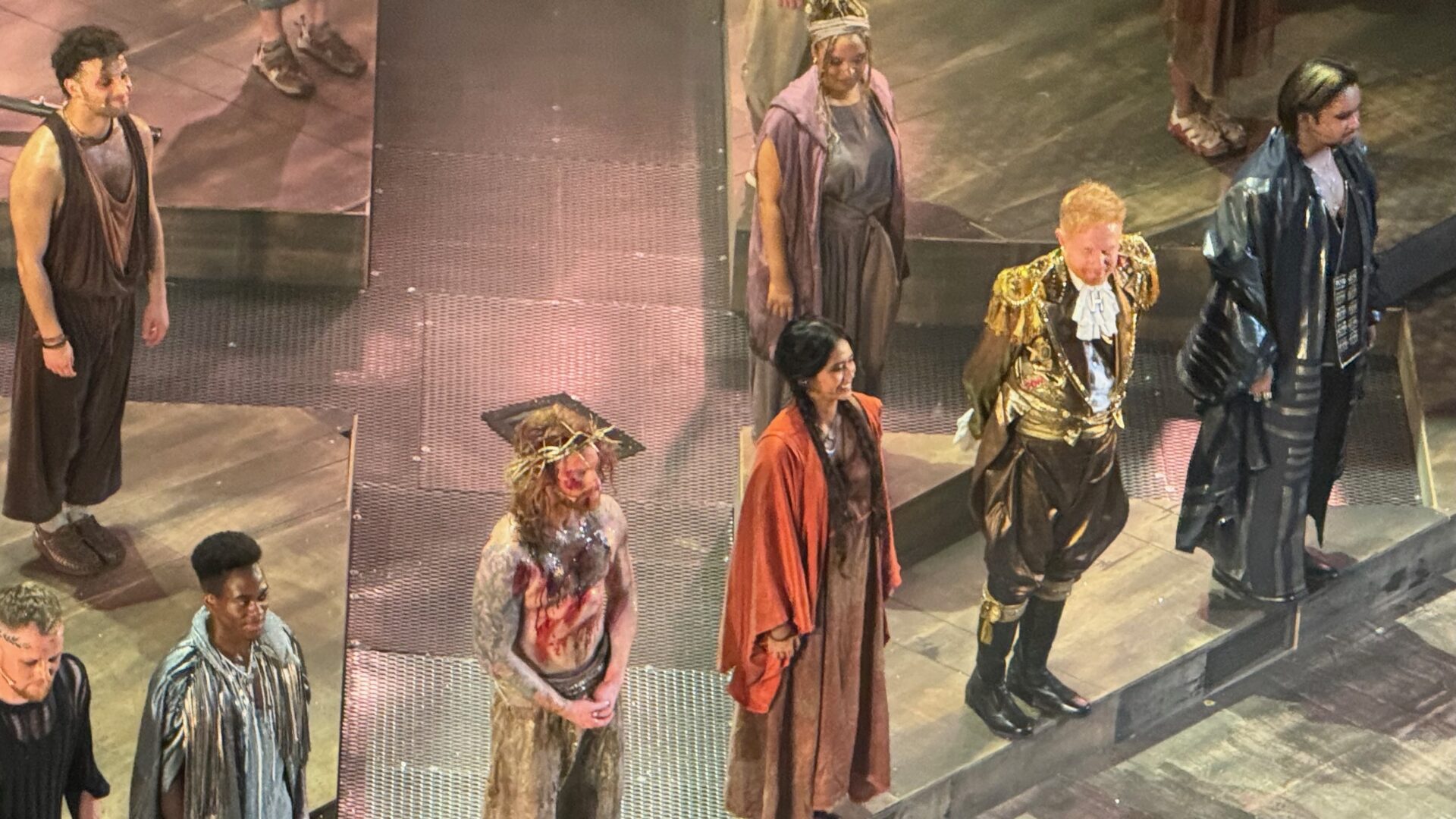
Palladium Superstar feels flat, despite later flashes of second-act brilliance.
The cast of Jesus Christ Superstar takes their bow.
It’s World Cup season, and if you heard somebody say it’s a game of two halves, you’d immediately assume they were talking about one of the matches on television, not the latest production of a West End musical.
The current production of Jesus Christ Superstar at the London Palladium is directed by Tim Sheader, who spearheaded the Regent’s Park Open Air Theatre production of this musical. In fact, the official website says, “The award-winning Regent’s Park Open Air Theatre production of Jesus Christ Superstar comes to the West End.” This has left me entirely bamboozled, because I saw that version in the park and was blown away, so much so that we went back to a concert version of it in 2020, when everybody, including actors, had to be socially distanced. Remember those days? This evening, I left the Palladium definitely not feeling that I had been blown away by what I had seen.
The current run is certainly marketed on the star performers playing the roles of Jesus and Herod. Pop-rock and Eurovision star Sam Ryder is Jesus, while the role of Herod is played by a revolving door of big names who drive the price of seats up. Tonight, it was Modern Family star Jesse Tyler Ferguson who was playing Herod. PY and I were a bit confused because, when we originally looked at ticket prices for his performances, they were through the roof, and we thought we had booked for one of the less well-known celebrities. Perhaps it’s best we don’t name them. Anyway, it turns out that wasn’t the case. I mention that because it should have added a bit of extra magic to our night. But…
I really don’t know how to describe how I felt about Act One, except that I walked into the interval bar, and when PY asked how I felt, I said it was as flat as a pancake, fully expecting one of our theatre disagreements. Yet we were both of the same opinion. Jesus Christ Superstar opens with much more of a bang, and this was a whimper. For many of the early scenes, Sam Ryder is wandering the stage, looking a bit lost, as if he stumbled into the Palladium by accident. And I really felt the whole of the first act didn’t use his voice to its full extent.
The rotating casting of Herod is, to me, a bit of a gimmick designed to drive up prices. Still, I can see how interesting it is to observe the role played by different people who may attract different audiences to the theatre. So, credit for trying to bring in more diverse audiences. But there’s a second gimmick, and I really don’t understand the point of this one.
In the Regent’s Park production, scaffolding was used as part of the backdrop and scenery and also served as a location for the orchestra. It provided a kind of urban realism and a rock-stadium aesthetic to a quite intense production. It’s been extended at the Palladium to allow for the sale of audience tickets on the stage. Tonight, I felt that this caused two problems.
The first is that, quite frankly, the people on stage are quite distracting. They’re standing, looking at the players, and many of them burst into grins as soon as an actor approaches them. Additionally, the gritty realism provided by the staging and enhanced by the lighting is ruined when an audience member wears bright clothing. A woman in my eyeline was wearing a long, flowing white skirt: a lovely summer outfit for our current weather, but not really in keeping with the atmosphere they’re trying to set. I learned later that on-stage audience members are asked to wear black. Perhaps they should enforce the rule, but I guess that’s pretty hard if you’re raking in the extra cash from the tickets.
The other issue I have with accommodating audience members on stage is that the performance area needs to extend into the auditorium. For this show, it’s more than I’ve ever seen at the Palladium. And that meant a huge swathe of the audience on the upper levels missed fairly extensive parts of the action. PY reckoned he’d lost sight of a third of the action. These tickets were not sold as restricted-view tickets, and many people missed the action for much of the evening.
Now, to me, Act Two was a totally different production. It came alive, and energy surged. Sam Ryder’s voice was properly shown off. Jesse Tyler Ferguson, camping up Herod a little bit, blew a lot of the other performances off the stage, and he’s only there for one song. Can’t knock him for taking the money, especially as he gave a great performance. I’m not sure I’d say the second half came anywhere close to the performance I remember from Regent’s Park, but it definitely improved my overall feeling about the evening.
I still haven’t figured out what the messages with the cast performing with handheld microphones mean, but I’m sure there’s something in it. And I can’t figure out why it switches from what are obviously wireless microphones to ones with enormously long cables. I can see the point of using one of them to tie up Christ; it’s probably some message that I’m not quite getting, but I wish I’d caught that bit.
There are other notable performances. David Thaxton is fantastic as Pontius Pilate; his performance is tremendously conflicted, for example, when he’s not sure what to do with Jesus. And, to be clear, Sam Ryder’s performance of Gethsemane is an example of why he should be so right for the role.
But somehow, it didn’t work for me. Flat seems like a good one-word description. JCS should be more, and the Palladium has all the pieces; they didn’t fit together for me. I can’t put my finger on why this lands differently from Regent’s Park. It can’t be simply because they’re now doing it with a roof.
I wholeheartedly recommend seeing something new instead.